Welcome to You Are Supported (YAS): Your Partner in Recovery
At You Are Supported (YAS), we believe in empowering individuals on their healing journey.
Founded by a team of medical professionals and survivors, YAS was created to fill a critical gap in post-surgery care: providing comfortable, practical, and supportive solutions for those recovering from chest and upper torso trauma.
Our mission is simple—You Are Supported in every step of your recovery, both physically and emotionally.
Introducing our flagship product:
The YAS Bra
Specially designed with your needs in mind, this bra offers
unparalleled support and comfort like no other during your recovery process.
The Ultimate Post Surgery Bra that's adaptable
- Multiple Closures: The bra features a post-surgery bra front closure that allows you to easily wear and remove the garment without strain or discomfort. As well as right and left side closures for those with shoulder impingements or temporary lack of motion for a variety of reasons.
- Velcro, Not Metal: Prefer something even simpler? Our bra also has Velcro closures with 2" widths for comfort, ensuring a secure fit with minimal effort.
- Premium Materials: Made from soft, breathable fabric, this bra minimizes irritation and promotes healthy healing.






- Customizable Fit: Adjustable straps, chest band, closures for a range of sizes to ensure the perfect fit and desired amount of compression for every body type.
FAQS
Who can benefit from wearing this bra?
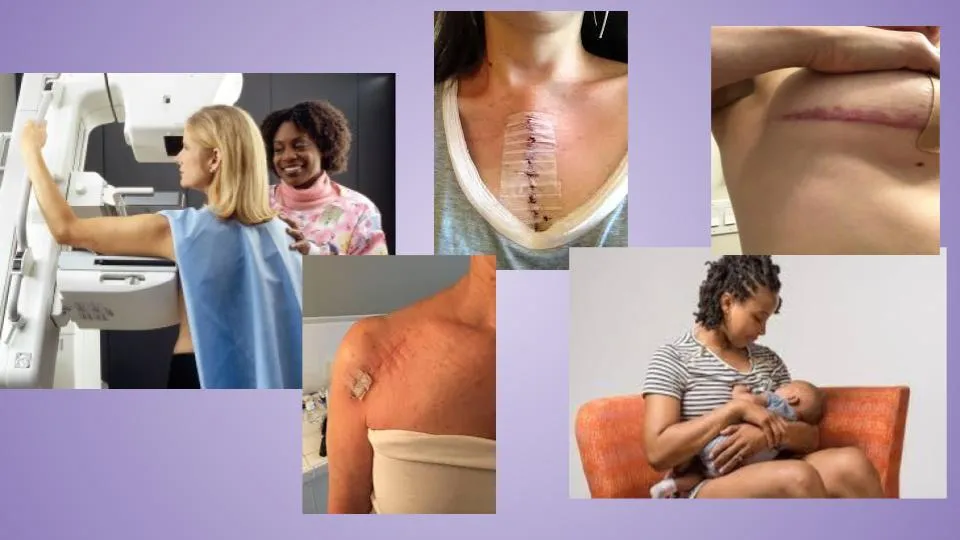
This bra is designed for anyone who has undergone upper torso and chest-trauma, including shoulder impingements mastectomies, lumpectomies, and reconstructive surgeries.
It’s also beneficial for those recovering from biopsies, mastitis, fibroids, calcifications, and even breastfeeding moms who need ice pads or relief from an overzealous mammogram. The bra is designed to provide comfort, breathability, and easy access to JP drains post-surgery.
What features make this bra suitable for post-surgery recovery?
The bra is designed with features that speed recuperation and provide maximum comfort:
- Thick elastic band with two unique drain access points (patent pending) for gentle accessibility and support.
- Front and side openings and strap closures with adjustable, wide luxe Velcro bands for ease of use and breast expansion.
- Breathable, EPA-approved antimicrobial treated mesh lining to support breast and nipple reconstruction.
- Lining pockets in cups and both sides for compression pads, ice and cooling packs to provide post-surgery relief.
- Made of 95% Polyester and 5% Spandex, with plastic buckle adjusters, Velcro, and a wire-free design.
How does this bra support emotional healing?
We understand that healing is not just physical, but emotional as well. That’s why our bras are designed to be comforting and beautiful, helping you feel more confident and supported during your recovery. We strive to build a caring relationship with our customers, offering not just a product, but compassionate support during what may be one of the most challenging times in your life.
Where are these bras designed and manufactured?
Our bras are designed with input from patients and clinicians in the USA to ensure they meet the highest standards of comfort and functionality during recovery.
Recent TitTalk Blogs
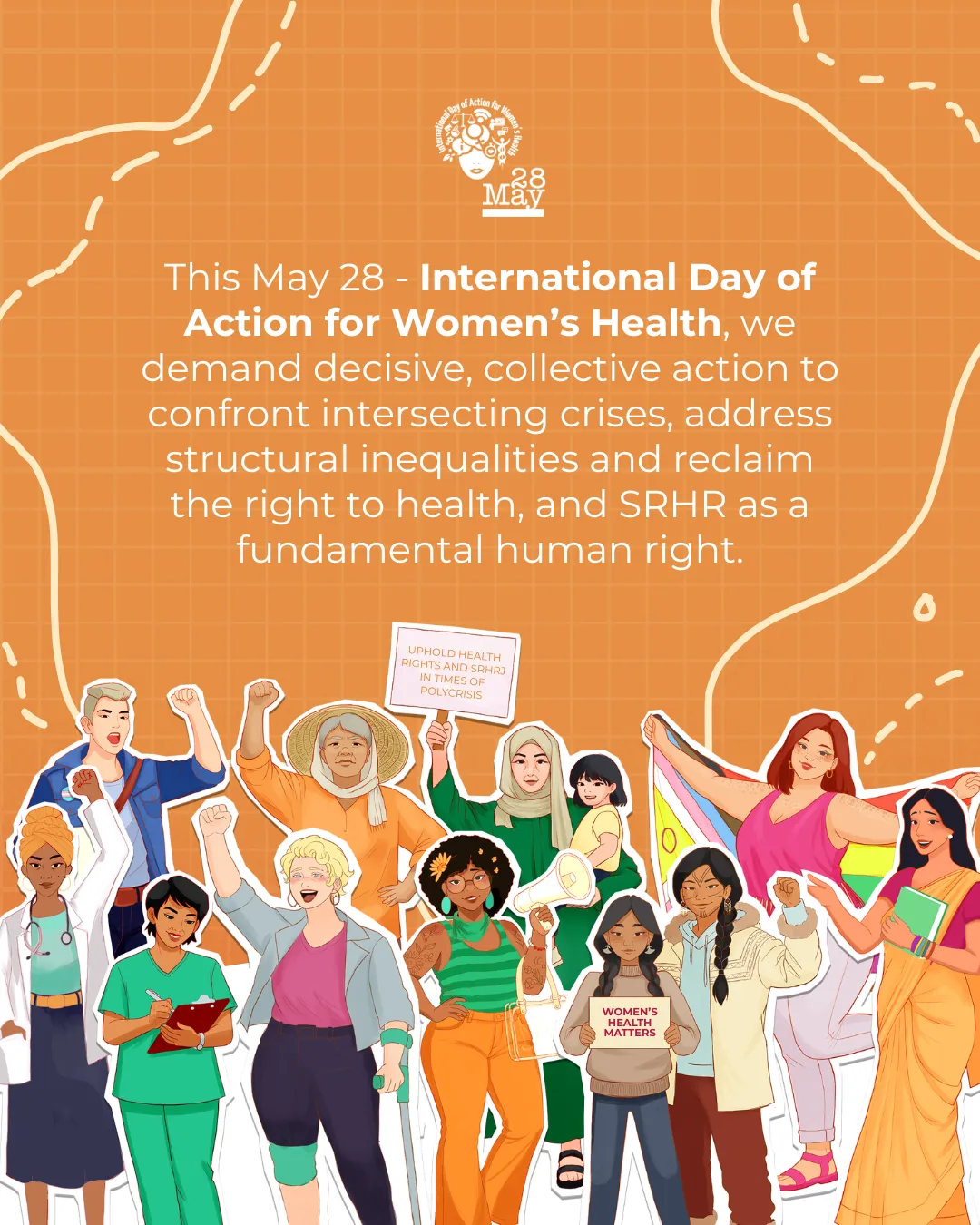
Women's Health Rights 2026: Comprehensive Care Is Essential, Not Optional
Women's Health Rights 2026: Comprehensive Care Is Essential, Not Optional
Intro Brief Open with the 1987 Costa Rica meeting as a scene-setting moment — a room full of women from across Latin America and the Caribbean who decided the world needed a day of reckoning for women's health, because no one else was going to call it. The hook is this: nearly 40 years later, that reckoning is still unfinished — and in 2026, the stakes are higher than ever. The intro should establish the thesis and signal that this piece is not a listicle of wellness trends but a call to action rooted in history, lived experience, and collective power.
Thesis Statement Women's health has never been a favor granted by systems — it has been a right fought for by women. In 2026, amid compounding global crises, that fight is not historical. It is happening now. And every woman who has ever navigated a diagnosis, a recovery, or a system that didn't see her whole self knows: comprehensive care is not a nice-to-have. It is essential. It is non-negotiable. And it is worth fighting for — together.
The Day the World Was Asked to Pay Attention
A Room in Costa Rica, a Decision That Changed Everything
In 1987, women gathered in Costa Rica for the International Women's Health Meeting. They came from across Latin America and the Caribbean. They were researchers, advocates, organizers. They were fed up.
Out of that meeting came a proposal: set aside one day every year to demand the world take women's health seriously. May 28 became that day. Not because a government declared it. Not because a health agency decided it was time. Because women in a room said enough.
That decision became the International Day of Action for Women's Health. Nearly 40 years later, it still carries the weight of why it was created.
What LACWHN and WGNRR Built Together
The Latin American and Caribbean Women's Health Network took responsibility for the region. The Women's Global Network for Reproductive Rights took it worldwide. Two networks, working together, building a campaign that would grow to reach every corner of the globe.
This wasn't a top-down initiative. It started with the people who felt the problem most directly. That's worth remembering.
What the Founders Were Fighting Against — and What Remains Unchanged
In 1987, the core demands were straightforward: access to care, respect for women's bodies, health systems that saw women as whole people. Not patients to be managed. People with rights.
In 2026, the May 28 Call to Action carries the same demands. Over 100 organizations across Africa, Asia, Latin America, and beyond co-created this year's theme: Essential, Not Optional. Women's health rights are not a negotiating position. They are not a line item that gets cut when budgets tighten or political winds shift.
They are a right. And right now, that right is under pressure in ways that would not surprise the women who sat in that room in Costa Rica — but should alarm the rest of us.
The Body the System Forgot — Recovery, Adaptive Care, and the Invisible Gap
What Happens After Discharge
The hospital stay ends. The paperwork is signed. Someone drives you home.
And then you're on your own.
For millions of women recovering from breast cancer surgery, cardiac procedures, thoracic surgery, stroke, or shoulder repair, that moment is where the real work begins. It's also where the healthcare system largely stops showing up.
Discharge instructions tell you what not to do. They don't tell you how to get dressed in the morning when you can't lift your arms. They don't account for the fact that most clothing was never designed for a post-surgical body. That gap is not minor. For women managing drains, restricted range of motion, or one-handed dressing, it's the first obstacle of every single day.
When Getting Dressed Becomes the First Battle of Recovery
There's a version of women's health that gets talked about in policy documents and workplace benefit packages. Then there's the version that happens at 7am, alone in a bathroom, trying to figure out how to get a bra on after a mastectomy.
Those two versions rarely meet.
Post-surgical dressing challenges are not a niche problem. Breast cancer affects 1 in 8 women in the United States. Cardiac and thoracic surgeries number in the hundreds of thousands annually. Stroke survivors, many of them women, face dressing challenges that can last months or years. This is a large population navigating a daily physical reality that most health systems don't address and most garment companies don't design for.
Evidence-Based Design as an Act of Care
This is the gap You Are Supported was built to fill.
The YAS Recovery Bra was developed with input from occupational and physical therapists. Four-way stretch fabric. No metal. Front and side openings. Fully washable. Every design decision reflects what real recovery actually looks like.
That's not a product feature. That's what comprehensive care looks like when it reaches someone where she is.
Women's health rights in 2026 can't stop at the clinic door. Recovery happens at home, in bodies that need more than a prescription. When the system leaves women to figure it out alone, the gap gets filled by people who were paying attention. Sometimes that's a company. More often, it's other women.
Which raises a harder question about what's happening to women's health right now, beyond any single diagnosis or recovery room.

Come Be Social
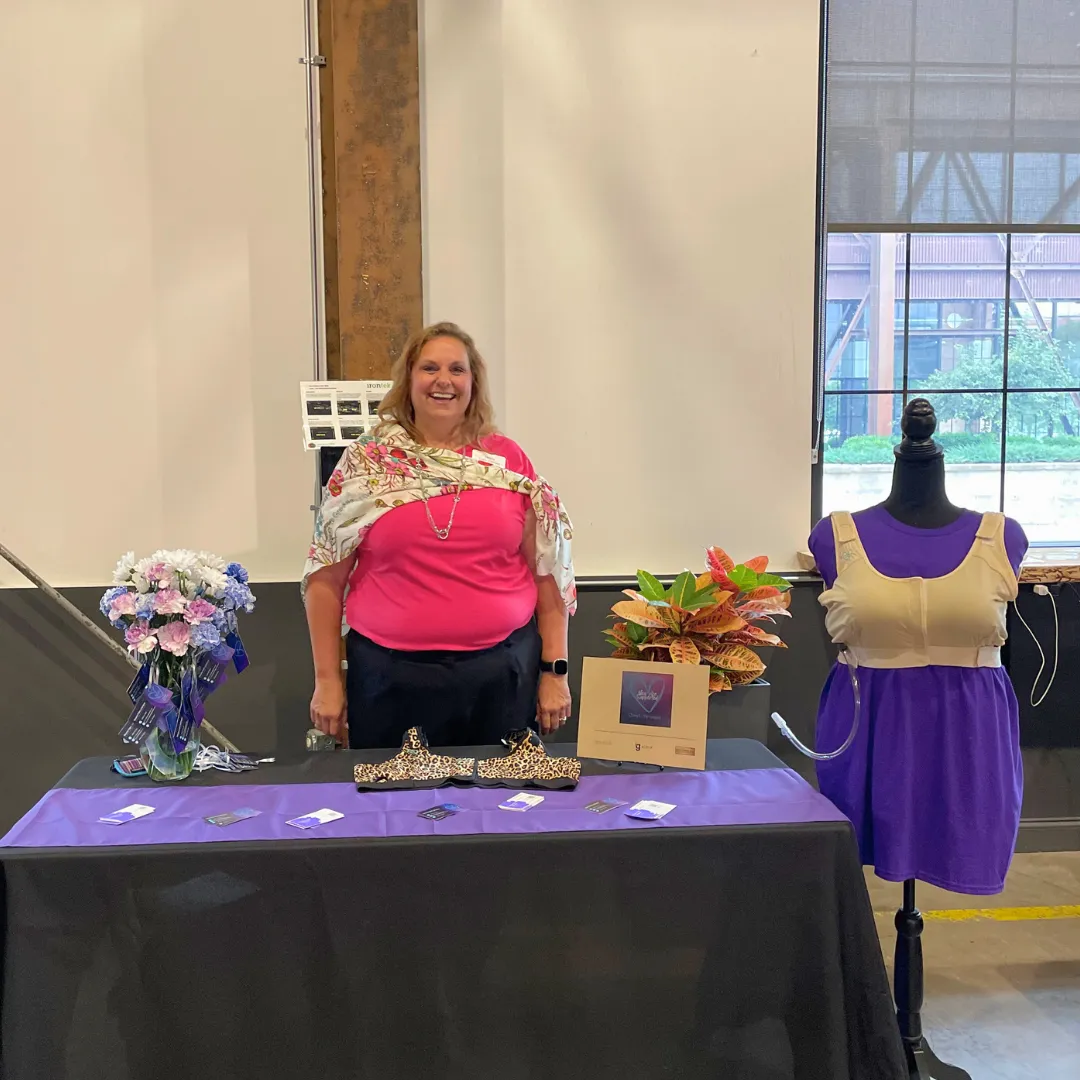
Why did you create this bra?
Hi! I'm Deana!
After undergoing four surgeries on my right breast, I experienced the emotional and physical pain of post-surgery recovery.
The hospital-provided support bras were uncomfortable and lacked any sense of femininity or comfort. I wanted to create something that not only supports physically but also comforts emotionally, with beautiful designs and uplifting colors.
My mission is to provide comforting and comfortable clothing that aids in both the physical and emotional healing process.
Get In Touch
@ Copyright 2024 - You Are Supported LLC All Rights Reserved
Facebook
Instagram